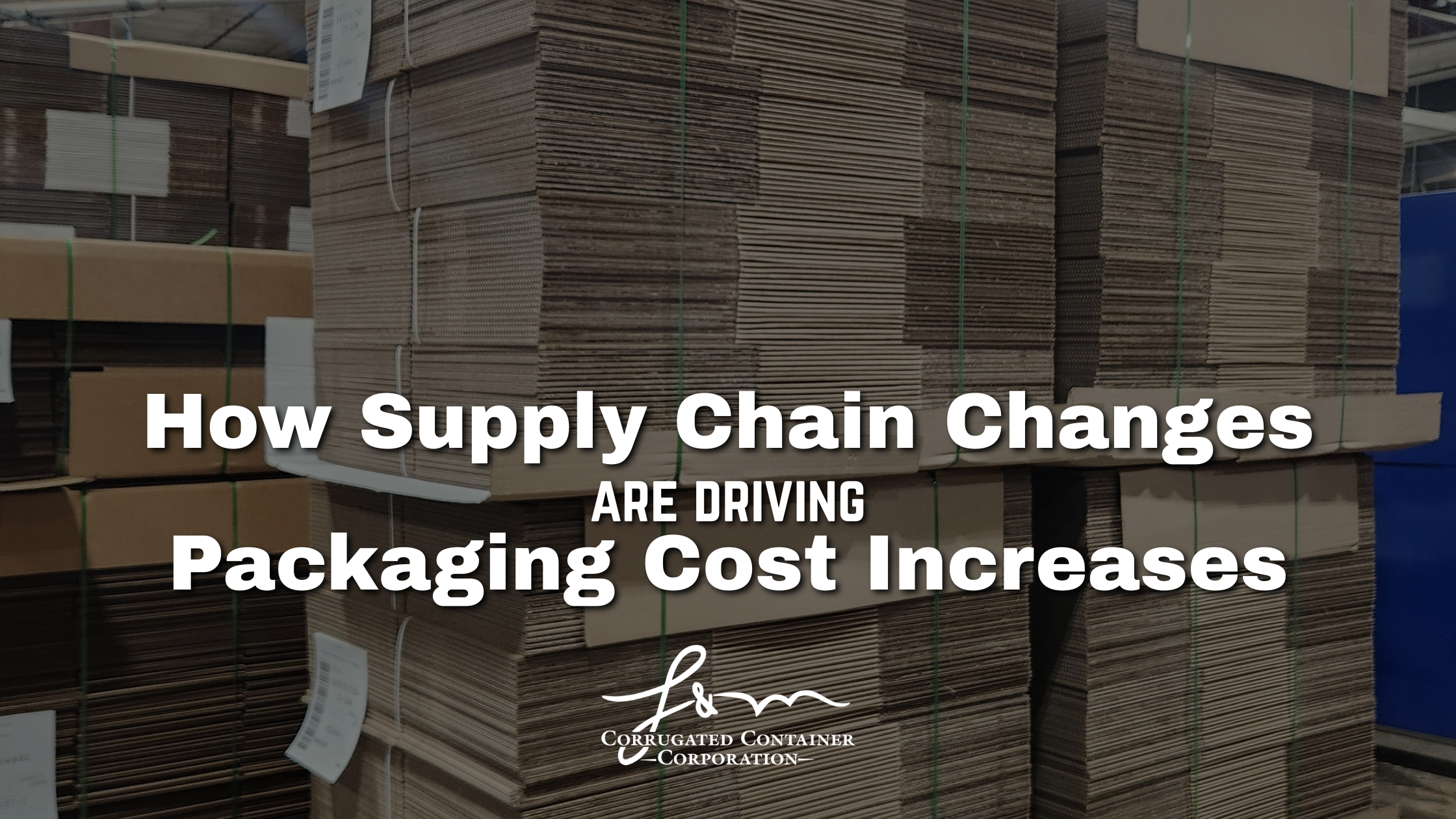
If purchasing packaging feels more expensive than it used to, and more unpredictable, you’re not imagining it. For many purchasing teams, packaging has shifted from a predictable line item to one that requires constant monitoring and adjustment. Over the last several years, packaging costs have been shaped by profound changes across global and domestic supply chains. What used to be a relatively stable input for packaging has become closely tied to raw material markets, transportation networks, and global demand growth.
Understanding why packaging costs are shifting can help businesses plan more effectively, make smarter packaging decisions, and avoid surprises down the road.
Packaging Is Deeply Tied to the Supply Chain
Packaging doesn’t exist in isolation. Every box, carton, container depends on a multi‑stage supply chain that includes raw material extraction, manufacturing, transportation, and distribution. When any part of that chain becomes unstable, packaging costs feel the impact almost immediately.
Since 2023, supply chains have been affected by a combination of lingering pandemic effects, geopolitical uncertainty, inflation, and structural changes in how goods are produced and moved. These pressures have not fully eased, and in many cases, they’ve become permanent features of the market rather than temporary disruptions. What’s important to recognize is that many of these pressures are no longer temporary disruptions, but they represent a new baseline for how packaging markets operate.
The Biggest Drivers Behind Rising Packaging Costs
Raw Material Price Volatility
Packaging relies heavily on commodity materials such as containerboard, pulp, plastic resins, aluminum, and glass. Prices for these materials have been volatile due to supply disruptions, energy costs, environmental regulations, and shifts in global demand.
Corrugated containerboard prices increased significantly in recent years, with many price hikes being implemented as input costs rose and demand increased. These increases reflect not just short‑term spikes, but sustained cost pressure across the fiber supply chain. As a result, businesses that rely heavily on these materials see more frequent price adjustments and less predictability in long-term cost planning.
Transportation and Logistics Costs
Packaging materials are large and expensive to move. Rising fuel prices, driver shortages, port and road congestion, and tighter transportation regulations have all increased freight costs both domestically and internationally.
Because many packaging products travel multiple times before reaching the end user, even small transportation increases can compound quickly, driving up overall packaging costs.
Global Demand Growth
One of the biggest shifts impacting packaging costs since 2020 has been the explosive growth of e‑commerce. What began as a pandemic-driven surge has become a long-term structural change in how products are sold, shipped, and delivered.
Global e-commerce has played a significant role in demand growth for corrugated packaging. E-commerce sales increased from about $3.3 trillion in 2019 to over $6 trillion by 2025 globally. Products being individually packaged in corrugated boxes and being shipped from warehouses to doorsteps worldwide have increased both corrugated packaging and transportation demands globally.
What Businesses Can Do to Manage Packaging Costs
While no company can control global supply chains, there are practical steps businesses can take to reduce exposure and regain control.
Optimize Packaging Design: Removing unnecessary components, right‑sizing packages, reducing material thickness, and designing for dimensional‑weight efficiency. Small design adjustments can lead to meaningful cost savings across large order volumes.
Plan Smarter with Better Data: Improved forecasting and better demand planning reduce the over or under-buying of packaging while its prices are still facing increases and consumer uncertainty. Increasing visibility of demand can also improve purchasing timing and supplier coordination.
Across the industry, many businesses are rethinking how they approach packaging decisions. Meaningful cost savings don’t always come from buying less packaging, but from optimizing design, materials, and logistics throughout the supply chain. Understanding the factors behind packaging cost increases can help businesses make more informed decisions, reduce uncertainty, and better anticipate future changes. It also encourages a more collaborative approach with suppliers, recognizing that many pricing fluctuations are the result of broader supply chain dynamics affecting the entire industry, not just individual businesses.
What This Means for Your Business
Packaging costs aren’t rising because of one single problem. They reflect a supply chain that has fundamentally changed. Material volatility, transportation costs, and risk management are now permanent considerations in packaging decisions. Pricing stability will depend on the balance between recycled fiber availability, transportation and energy cost trends, and global packaging demand growth.
Businesses that treat packaging as a strategic part of their supply chain—rather than a commodity—are better positioned to manage costs, improve resilience, and adapt to ongoing change.
Want to understand where your packaging costs can be optimized? Working with our team can help you identify opportunities to reduce costs and improve efficiency in your packaging. Contact us today to see where we can help your packaging solutions.
—
Online Shopping Statistics (2026): Growth, Sales & Demographics